As part of Alscot Estate’s long-term commitment to sustainable land management and regenerative farming, more than 700 hectares of Estate farmland is currently subject to organic conversion, with the aim of restoring soil vitality and creating a more resilient and sustainable farming system for the future.
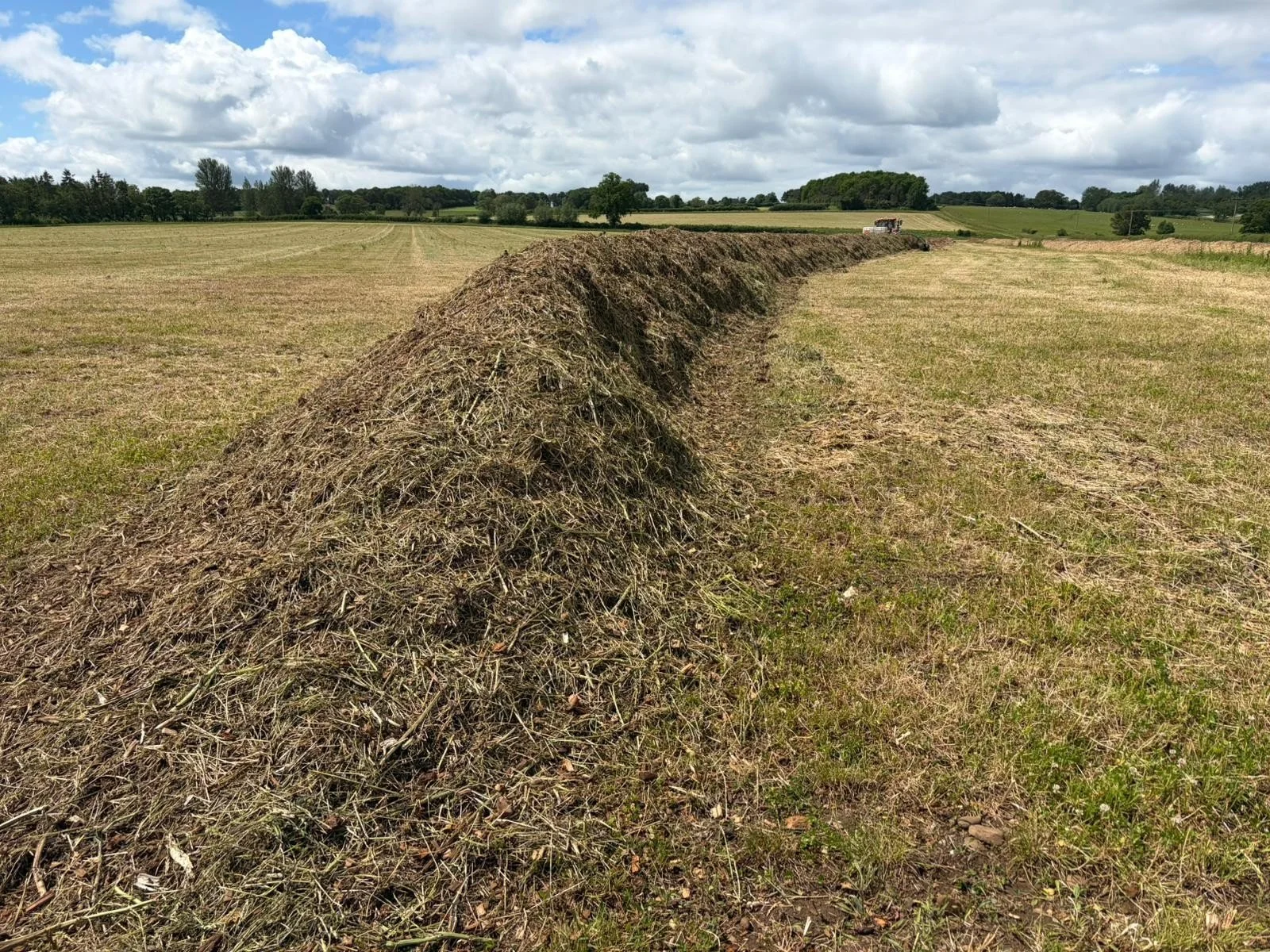
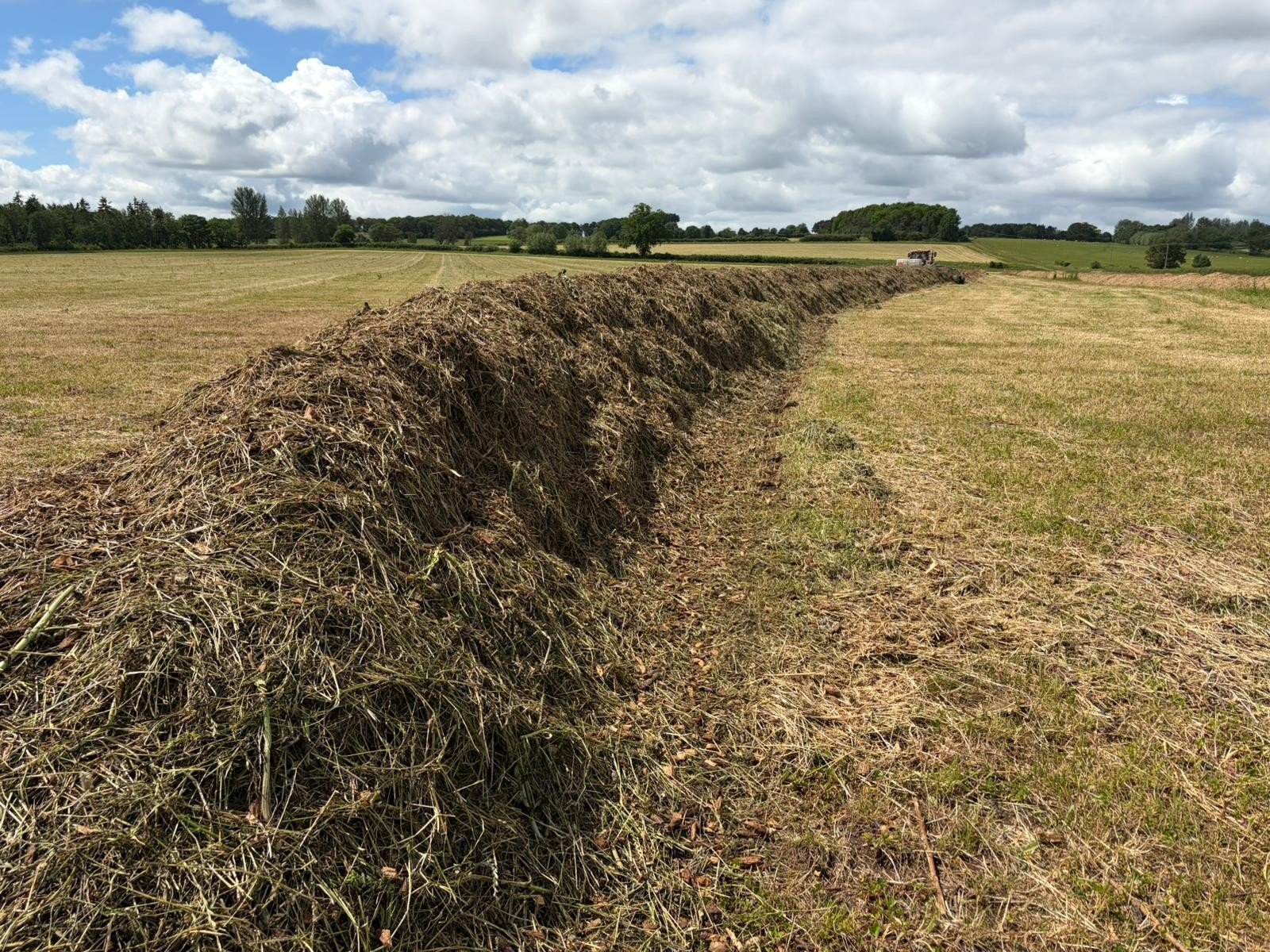
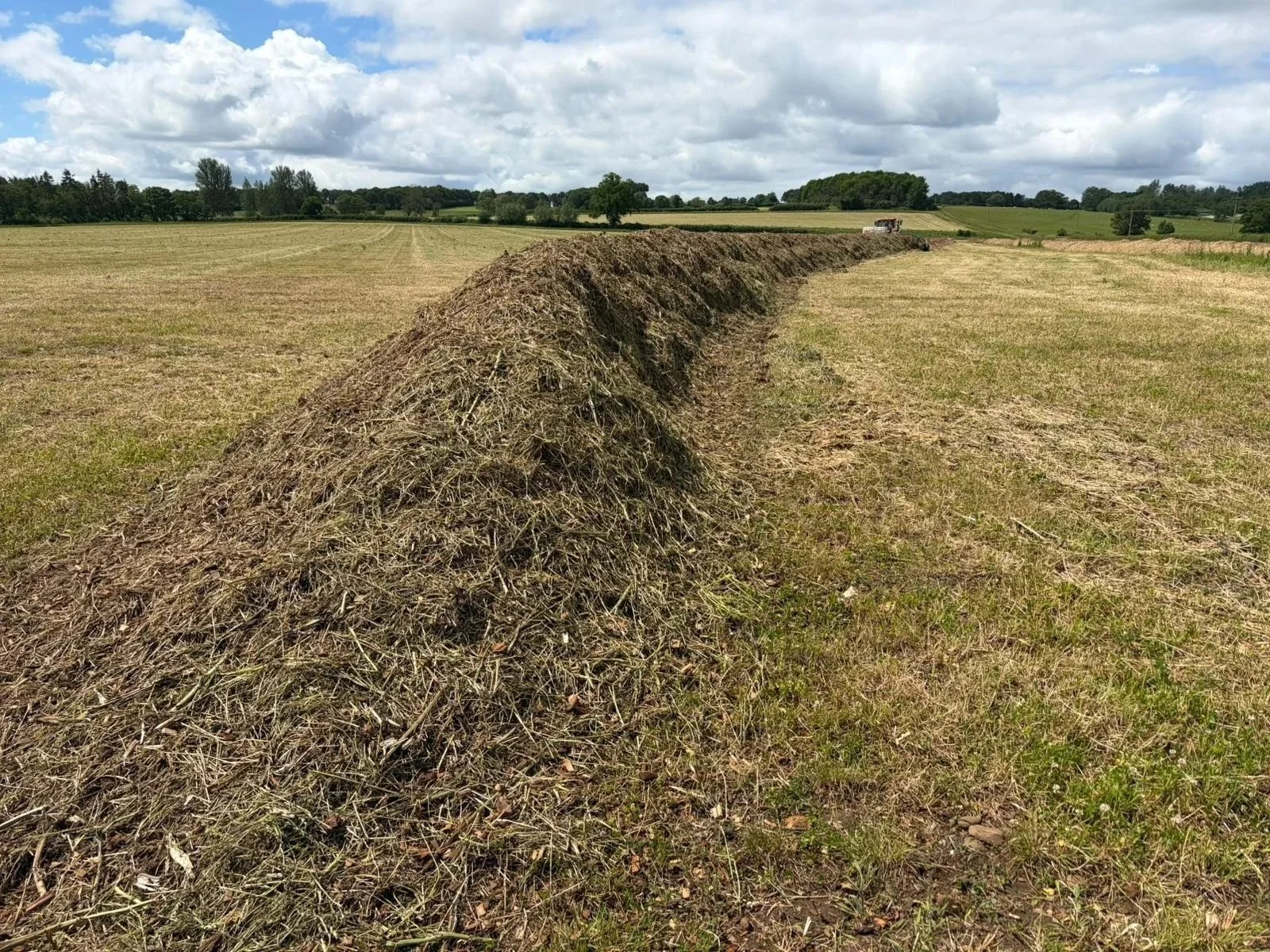
As part of this wider regenerative farming system, we are currently composting 60 acres of herbal leys in partnership with local contractor, Tubbs End Farms, to transform natural waste materials into nutrient-rich organic matter through controlled biological decomposition, without the use of synthetic chemicals or contaminated inputs – keeping within the organic farming standards.
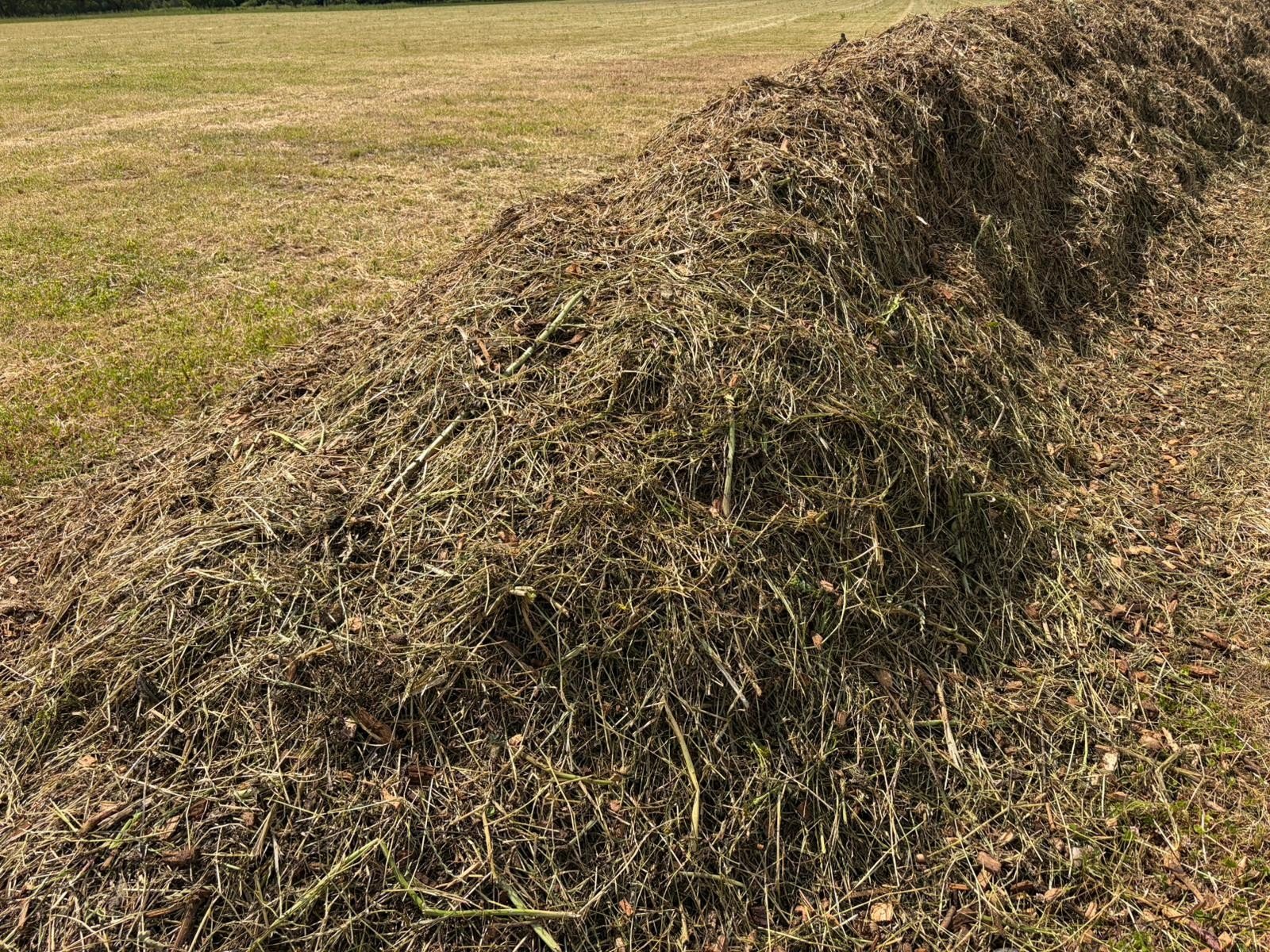
The intention is to combine the “green” nitrogen-rich herbal ley crops with “brown” carbon-rich woodchip. The Estate woodchip plays a particularly important role, as not only does it provide a valuable carbon source, but it also improves airflow within the compost heaps, prevents compaction and excessive moisture, and supports the fungi responsible for breaking down more resilient organic materials. Maintaining the correct balance between these green and brown materials is essential, as the microorganisms responsible for decomposition require both nitrogen and carbon to thrive.
The composting process itself relies on naturally occurring bacteria and fungi to break down the organic material, as fast-acting microbes consume readily available sugars and proteins to generate heat, which helps destroy weed seeds and pathogens. As the process continues, temperatures gradually cool, allowing tougher fibrous materials such as cellulose to then decompose. The final curing stage produces a stable, dark, crumbly humus-like compost, rich in organic matter and beneficial microbial life, which can then be spread back onto the land.
Once spread back onto the land, the compost will help to improve soil structure, increase water retention, enhance nutrient availability, encourage microbial activity, and contribute to the long-term carbon storage within the soil.
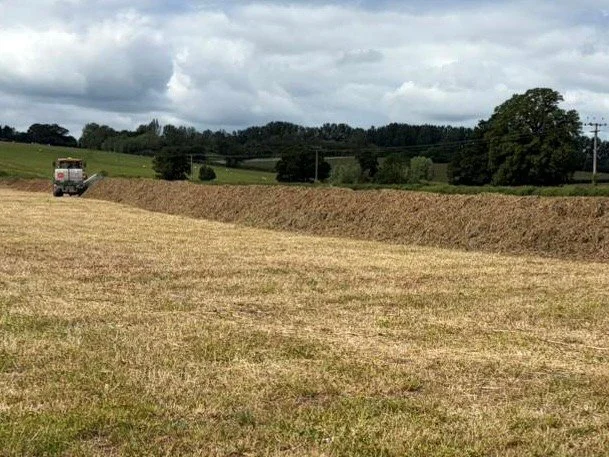
We are also keen to showcase the practical side of the operation with the use of specialist machinery and equipment, such as a windrow machine. These machines speed up the decomposition process by aerating and mixing water into the compost heaps, introducing oxygen, releasing trapped heat, and distributing moisture evenly, as the compost piles mature over a 2 - 3 month period. We're looking forward to seeing the results and as part of the ongoing project, we continue to survey and monitor the land.