
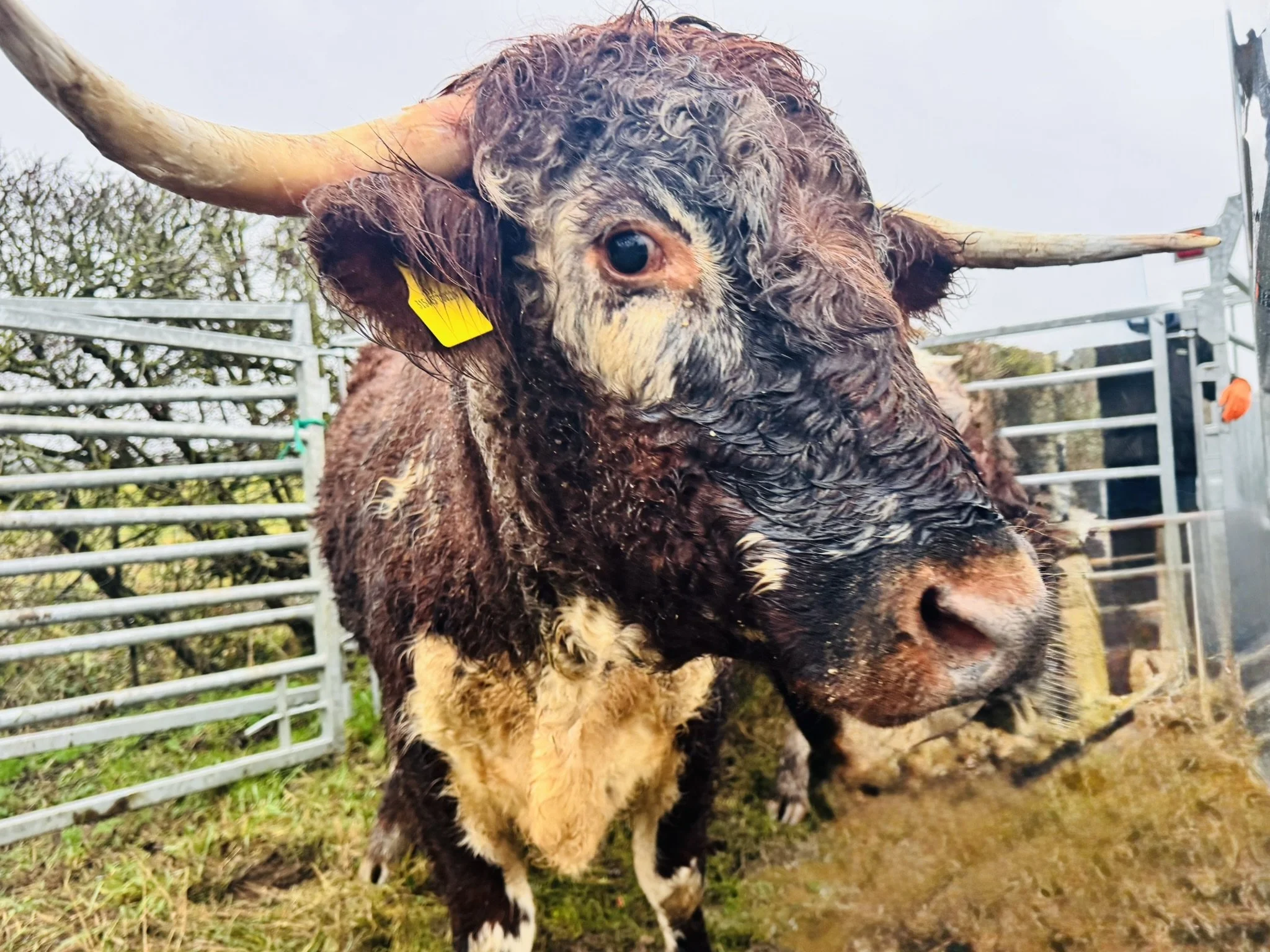
In December, Alscot introduced Monil virtual fencing as an alternative to traditional physical fencing to manage our herd of Longhorns. While this technology isn’t suitable for protecting livestock and land in every location, it proved to be the ideal site to trial this innovative management tool.
Virtual fencing is operated via solar-powered GPS collars worn by the cattle. These collars provide warning signals to encourage animals to remain within a defined boundary, and compared to traditional fencing, this system offers greater flexibility and significant operational benefits.
Using a smartphone app, we can set and adjust grazing boundaries directly on a digital map. That information is then communicated instantly to the collars. As an animal approaches the virtual boundary, the collar emits a series of escalating audio tones as a warning. Cattle quickly learn to associate these sounds with the boundary and the potential mild pulse, encouraging them to turn back and remain within the permitted area.
The GPS technology enables real-time livestock monitoring, allowing us to see exactly where animals are located at any time. Grazing areas can be changed instantly to suit conditions, support rotational grazing, and protect sensitive land — all without the physical labour normally required to move or build fences.
While the upfront investment in collars and equipment can be significant, virtual fencing removes the substantial costs associated with installing physical fences, including materials and often intensive labour, which can be especially challenging in difficult terrain. The system also stores historical grazing data, helping farmers optimise pasture use and identify unusual animal behaviour or boundary breaches.
Animal welfare remains a priority and a short training period is required. Our cattle have adapted quickly and, on the whole, have responded well to the system in such a short time. The system now offers us the opportunity to graze areas of the Estate that we haven’t been able to graze previously.
Mooving Into Modern Livestock Management